
 Posts
Posts


Working nights doesn’t mean you have to give up your fitness goals. But it does mean you need a plan that respects your sleep schedule, your energy dips, and the reality of training when the rest of the world is winding down.
Most gym plans are written for a “normal” day: wake up in the morning, train in the evening, sleep at night. Night-shift life flips that. If you copy a standard plan, you’ll often feel like you’re always tired, always hungry, and always behind. The fix is not “more motivation”—it’s better structure.
In this post you’ll get a complete night-shift gym plan that covers:
- Training timing (when to lift for best performance)
- 3-day and 4-day programs (simple, repeatable, progressive)
- Sleep strategy (the real secret weapon)
- Caffeine rules (so it helps you, not hurts you)
- Meal structure (stable energy without overeating)
- Recovery (so you don’t burn out)

Image credit: Unsplash
1) Night-Shift Mindset: Stop Thinking in “Clock Time”
The first step is to stop judging your routine by the clock. A night-shift schedule is not “wrong”—it’s just shifted. Instead of thinking “I train at 6 PM,” start thinking:
- Wake time = your morning
- Time since waking = what matters for performance
- Bedtime = when your body wants low stress
Why this matters: Your strength, coordination, and motivation usually improve a few hours after waking. That’s when body temperature rises and your nervous system feels more “online.” Training too close to sleep, on the other hand, can spike adrenaline and make it harder to fall asleep—especially after a long night shift.
2) When Should You Train If You Work Night Shifts?
There’s no single perfect time. But there are patterns that work better for most people. Choose the option that fits your life and stick to it consistently for at least 3–4 weeks.
Option A (Best overall): Train 2–6 hours after waking
If you can choose, this is usually the sweet spot for strength and muscle gain. You’re awake enough to lift heavy, but not so late that it ruins sleep.
Option B (Most practical): Train right after your shift
This can work if your gym is open and you can keep the session controlled. The key is to avoid turning it into a “high-stress, max-effort” workout that keeps you wired for hours afterward.
Option C: Train before your shift
This is great if your gym is less crowded or if you find it easier to relax and sleep after work. You’ll start your shift feeling accomplished (and usually less likely to snack mindlessly).
Rule of thumb: Try not to do a brutal leg day in the last 2–3 hours before you plan to sleep. If your only choice is to train close to bedtime, keep it moderate: fewer sets, lower intensity, and finish with an easy cooldown.

Image credit: Unsplash
3) The Best Gym Plan for Night-Shift Workers (Minimum Effective Dose)
Night shifts already create stress. So your training should be:
- Simple (easy to repeat even when tired)
- Progressive (so you keep improving)
- Recoverable (so your sleep doesn’t collapse)
For most night-shift workers, the best plan is a 3-day full-body program. It hits every muscle multiple times per week, keeps workouts short, and still allows rest days when sleep is rough.
Plan A: 3-Day Full Body (3×/week)
Do these on non-consecutive days if possible (for example: Mon–Wed–Fri or Tue–Thu–Sat). If your schedule rotates, just aim for 3 sessions per week whenever you can.
Day 1 – Full Body A (Strength focus)
- Leg Press or Back Squat – 3 sets × 5–8 reps
- Bench Press or Dumbbell Press – 3 × 6–10
- Lat Pulldown – 3 × 8–12
- Romanian Deadlift – 2 × 8–10
- Plank – 2 × 30–60 sec
Day 2 – Full Body B (Back + legs + shoulders)
- Trap Bar Deadlift (or light conventional deadlift) – 3 × 3–6
- Overhead Press – 3 × 6–10
- Seated Cable Row – 3 × 8–12
- Walking Lunges – 2 × 10–12 each leg
- Hanging Knee Raises – 2 × 8–12
Day 3 – Full Body C (Hypertrophy focus)
- Hack Squat or Front Squat – 3 × 6–10
- Incline Dumbbell Press – 3 × 8–12
- Chest-Supported Row – 3 × 8–12
- Leg Curl – 2 × 10–15
- Lateral Raises – 2 × 12–20
Progression rule (simple and effective): Pick a rep range. When you can hit the top of the range for all sets with good form, increase the weight a little next time (even 1–2 kg is progress).
How long should the workout be? 45–70 minutes is plenty. If you’re consistently going over 90 minutes, you’re probably doing too much volume for night shift recovery.
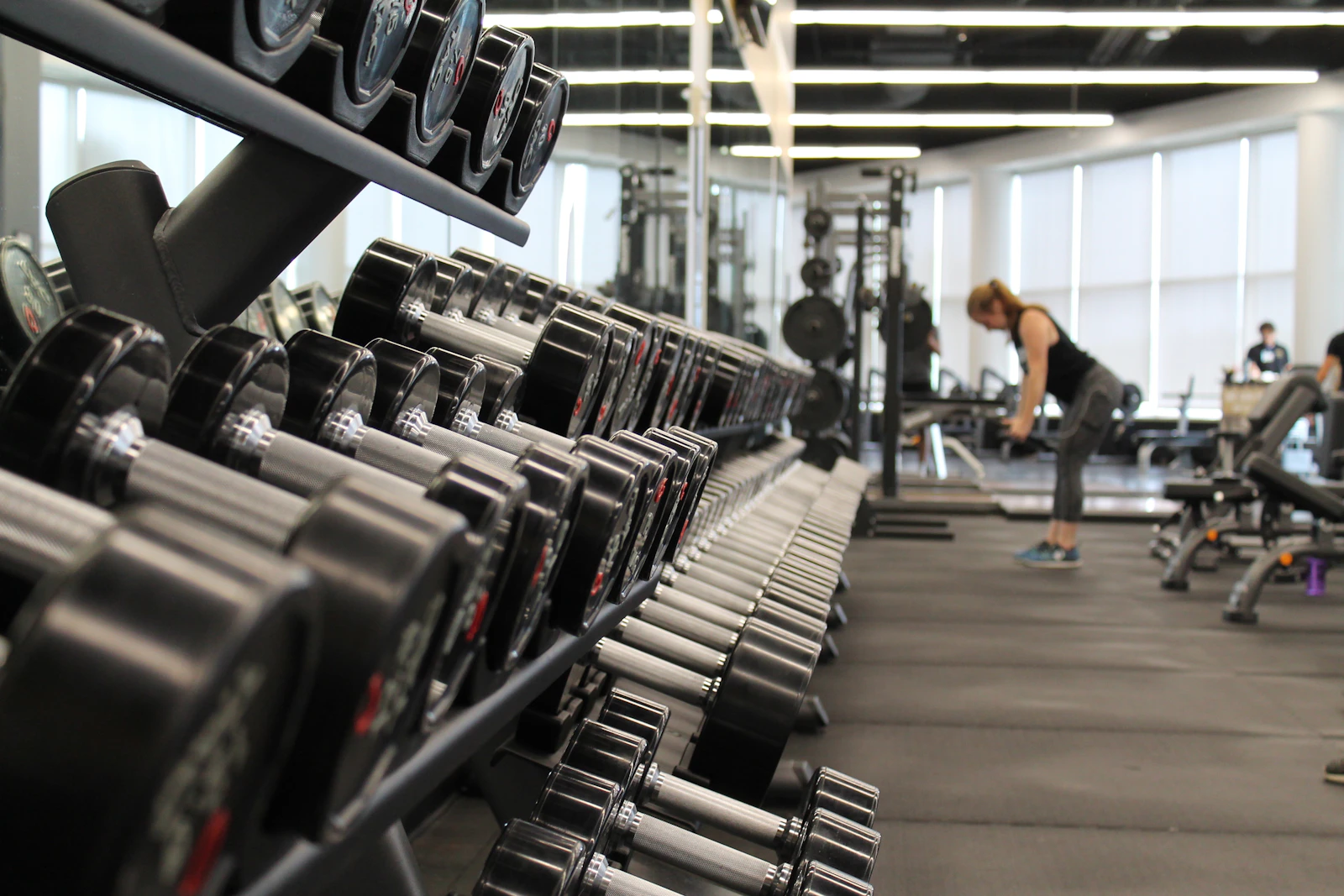
Image credit: Unsplash
Plan B: 4-Day Upper/Lower (For people with stable sleep)
If your sleep is consistent and you feel recovered most weeks, you can move to a 4-day split. But if your energy is unpredictable, stick to the 3-day plan.
- Day 1: Upper (push + pull)
- Day 2: Lower
- Day 3: Rest or light cardio
- Day 4: Upper
- Day 5: Lower
- Day 6–7: Rest
Night-shift upgrade tip: Keep one of your lower days lighter (more reps, fewer heavy sets). This protects your nervous system and improves sleep quality.
4) Warm-Up and Cooldown (Night Shift Edition)
When you’re training after waking or after a shift, your body can feel stiff. A smart warm-up reduces injury risk and improves performance.
5–8 minute warm-up:
- 2–3 minutes brisk walk or cycling
- Dynamic movements: hip circles, arm circles, bodyweight squats
- 2 ramp-up sets before your first big lift
Cooldown (2–5 minutes): If you train close to bedtime, finish with an easy walk and slow breathing. This signals your body that the “fight” is over.
5) Sleep: The Real Secret to Results (Muscle Gain & Fat Loss)
If you could pick just one thing to improve, pick sleep. Night-shift workers often do everything right in the gym, but lose results because sleep is broken.
What happens when sleep is poor?
- Higher cravings (especially sugar and salty snacks)
- Lower training performance
- Slower recovery and more soreness
- Harder fat loss (because hunger and stress rise)
Night-shift sleep rules that actually work
- Protect a consistent sleep block (even if it’s daytime)
- Blackout curtains + eye mask (make the room as dark as night)
- Cool temperature (around 18–20°C)
- White noise or earplugs (daytime noise is a killer)
- Phone away: reduce blue light 30–60 minutes before sleep
Nap strategy: If your sleep window is short, a 20–30 minute nap before your shift can improve alertness and reduce late-night junk cravings. Keep it short so you don’t wake up groggy.

Image credit: Unsplash
6) Caffeine for Night Shifts: The Smart Rule (So It Doesn’t Destroy Sleep)
Caffeine is a useful tool—but it can become a trap. Many night-shift workers keep drinking tea/coffee late into the shift and then wonder why they can’t sleep.
Simple caffeine plan:
- Take caffeine early in your shift (or early after waking)
- Keep the total daily caffeine moderate (example: 100–250 mg)
- Stop caffeine 8 hours before sleep (very important)
Example: If you plan to sleep at 8 AM, your last caffeine should be around midnight. If you sleep at 10 AM, last caffeine around 2 AM.
Training + caffeine:
- If you train after waking, caffeine works great pre-workout
- If you train after a shift (near sleep), skip caffeine or keep it very low

Image credit: Unsplash
7) Meal Structure for Night Shift (Energy + Appetite Control)
Night shifts often cause two extremes:
- Some people don’t eat enough, then binge after work
- Some people snack all night, then wake up hungry again
The solution is a repeatable structure. You don’t need perfect meals—you need consistent protein, enough fiber, and planned snacks.
The easiest night-shift meal template (4 eating moments)
- Meal 1 (after waking): Protein + carbs + fruit
- Meal 2 (before shift / pre-work): Balanced plate
- Snack (mid-shift): High-protein snack
- Meal 3 (before sleep): Light protein-focused meal
Practical meal examples (simple + “desi-friendly”)
Meal 1 (after waking):
- Oats + milk/curd + banana + nuts
- Eggs + roti + fruit
- Paneer bhurji + toast + fruit
Meal 2 (before shift or post-workout):
- Chicken + rice + vegetables
- Dal + rice + curd + salad
- Fish + potatoes + vegetables
Mid-shift snack (planned):
- Greek yogurt / curd bowl
- Protein shake + fruit
- Roasted chana + whey
Before-sleep meal (keep it light):
- Omelet + salad
- Curd + berries (or fruit)
- Soup + paneer/tofu
Protein target (for best results): Aim for 1.6–2.2 grams per kg bodyweight per day. If you don’t want to calculate, just make sure every meal has a strong protein source (eggs, chicken, fish, dal + curd, paneer, tofu, whey).
Hydration tip: Night shifts dehydrate you faster (AC, walking, caffeine). Keep a water bottle and set a simple goal like 2–3 liters per day.

Image credit: Unsplash
8) Fat Loss vs Muscle Gain: What Should Night-Shift Workers Choose?
You can do either, but the right choice depends on your sleep quality and stress level.
If your sleep is inconsistent → choose recomp or slow fat loss
When sleep is unstable, aggressive dieting can backfire. You’ll feel tired, cravings rise, and training suffers. A small calorie deficit (or maintenance with high protein) often works best.
If your sleep is solid → you can bulk or cut normally
If you’re sleeping well most days, you can run a normal bulking plan (calorie surplus) or a cut (deficit). Night shift itself doesn’t prevent results—poor recovery does.
9) Recovery: How to Avoid Burnout on Night Shifts
Recovery is not just “rest days.” It’s everything that keeps your body ready for the next session.
Night-shift recovery checklist
- Steps: Aim for 6,000–10,000 daily (adjust based on fatigue)
- Deload: Every 4–8 weeks, reduce volume/intensity for 1 week
- Don’t train to failure every set—keep 1–2 reps in reserve most of the time
- Mobility: 5–10 minutes after training is enough
- Sunlight: Get a short sunlight walk after waking (helps mood and rhythm)
Big warning sign: If your strength drops for 2–3 sessions in a row, your sleep is getting worse, and your mood is low—reduce training volume. More training is not always more progress.
10) Sample Schedules You Can Copy (Common Night Shift Examples)
Example 1: Shift 10 PM – 6 AM (Train after waking)
- Wake: 2:00 PM
- Meal 1: 2:30 PM
- Train: 4:30 PM
- Meal 2: 6:30 PM
- Work: 10 PM – 6 AM (snack around 1–2 AM)
- Light meal: 6:30 AM
- Sleep: 7:30 AM
Example 2: Shift 7 PM – 7 AM (Train before shift)
- Wake: 1:00 PM
- Meal 1: 1:30 PM
- Train: 3:30 PM
- Meal 2: 5:30 PM
- Work: 7 PM – 7 AM (snack around midnight)
- Light meal: 7:30 AM
- Sleep: 8:30–9:00 AM
Example 3: You train after your shift (closest to sleep)
If this is your only option, keep it simpler:
- Shorter workout (45–55 minutes)
- Lower intensity (avoid max sets)
- Finish with a 5-minute walk and deep breathing
- No caffeine close to bedtime
11) Frequently Asked Questions (Night Shift Fitness)
Is it bad to lift weights at night?
No. Your muscles don’t care about the clock. But your sleep does. If night training keeps you awake, shift your training earlier after waking or reduce intensity near bedtime.
Should I do cardio on night shifts?
Yes, but keep it reasonable. Walking is the easiest and most recoverable option. If you’re exhausted, prioritize steps and light cardio over intense HIIT.
What if my schedule rotates every week?
Use the 3-day full-body plan and treat it like a weekly goal: get 3 sessions done whenever you can. Consistency over perfection.
What supplements help night-shift workers?
Supplements are optional, but the most useful ones are: whey protein (for convenience), creatine (for strength), and electrolytes (if you sweat a lot). The real foundation is sleep + protein + progressive training.
12) Final Advice: The 3 Things That Matter Most
If you want results with night shifts, focus on these three:
- Train based on wake time (2–6 hours after waking is ideal)
- Hit your protein daily (1.6–2.2 g/kg)
- Protect your sleep (dark room, caffeine cutoff, consistent schedule)
Night shift is tough—but with the right plan, you can still build muscle, lose fat, and feel strong.
Want a Part 2? I can write either:
- Fat Loss Plan for Night Shifts (No Hunger)
- Muscle Gain Plan for Night Shifts (Desi Diet + Meal Plan)
Comments
Post a Comment